PPWR and packaging compliance: why inline printing matters
The upcoming Packaging and Packaging Waste Regulation (PPWR) is set to redefine how packaging is designed, printed, and managed across industries. For manufacturers, especially in medical and pharmaceutical sectors, this introduces new complexity: stricter traceability requirements, material restrictions, and increasing pressure to ensure compliance at every stage of production.
In this evolving landscape, printing is no longer a secondary technical step. It is becoming a critical enabler of compliance. Inline printing solutions, combined with the right ink technologies, offer a way to integrate traceability, flexibility, and sustainability directly into the production process.
Printing becomes part of packaging compliance
As regulatory requirements become more detailed, printing takes on a central role in ensuring packaging compliance across the EU. Harmonized on-pack requirements for material identification, recyclability, and disposal information make printed content essential to help consumers sort and recycle packaging correctly, regardless of country. In this context, every printed element, whether text, symbols, or codes, contributes directly to transparency, data accessibility, and regulatory alignment.
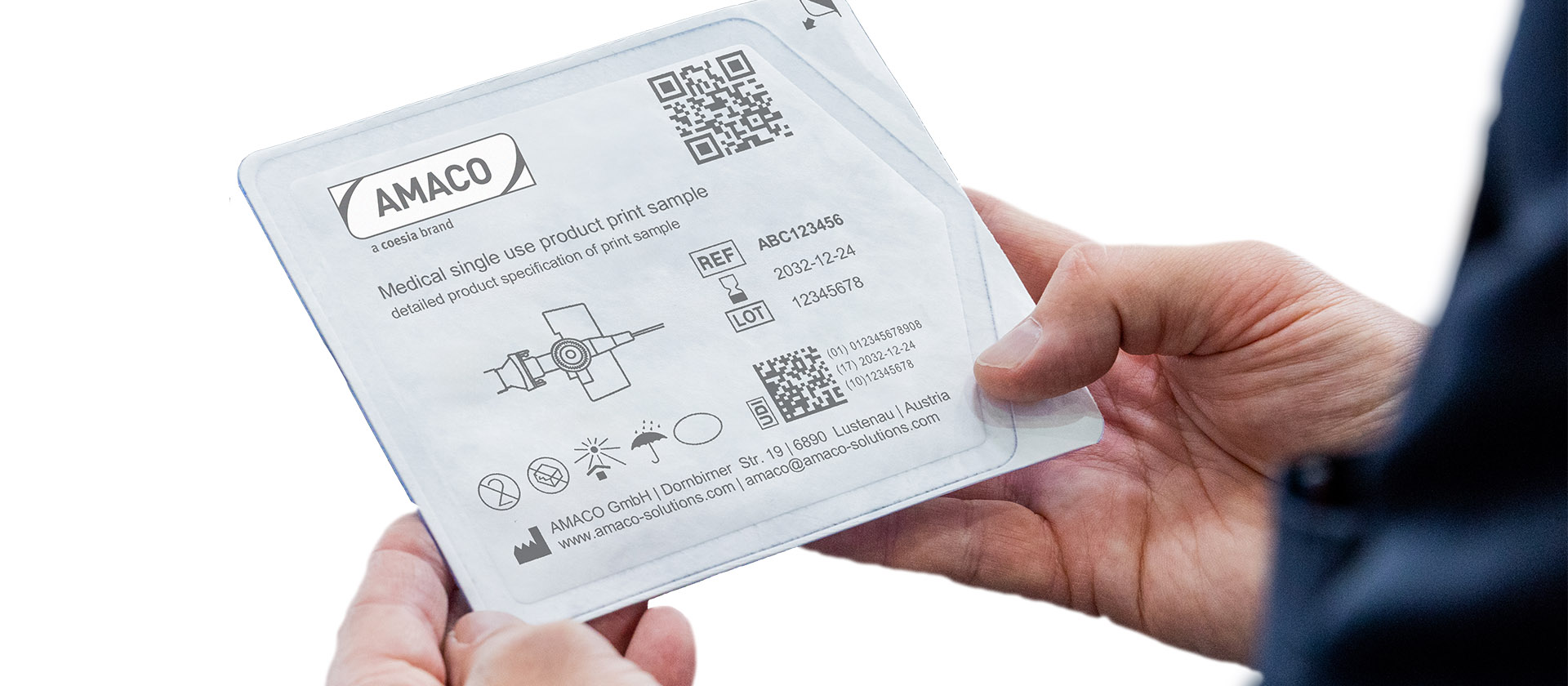
This role is further expanded through Digital Product Passports (DPPs), which require machine-readable identifiers such as QR codes or GS1 Digital Links to connect packaging to online data. As compliance becomes increasingly data-driven, printing and coding extend far beyond their traditional role, emerging as central enablers of digital traceability, system interoperability, and scalable, future-ready packaging strategies. Essentially, printing becomes a critical interface between the physical product and the digital ecosystem that supports compliance, transparency, and circularity.
New requirements for packaging printing & sustainable inks
Building on these developments, Digital Product Passports (DPPs) require each package to carry a unique, scannable code that links the physical product to its corresponding digital record, where detailed information can be accessed throughout the value chain.
Variable data printing plays a crucial role in this process by enabling serialization and item-level traceability, which in turn supports Extended Producer Responsibility (EPR) reporting obligations as well as anti-counterfeiting and brand protection use cases.
At the same time, the PPWR introduces strict Design for Recycling (DfR) criteria and chemical restrictions—such as bans on PFAS, heavy metals, and high-mass plastic additives—that fundamentally change how packaging must be printed. Compliance is no longer just about avoiding banned substances; it is about ensuring that the printed ink chemistry does not disrupt the recycling stream of the underlying substrate. This dual challenge of chemical purity and structural recyclability directly impacts modern printing technology and ink formulation choices.
The sustainable chemistry advantage: Optimizing recyclability through AMACO MOF inks
Achieving compliance under the PPWR’s Design for Recycling (DfR) grading system requires strict contamination avoidance and optical sortability. Traditional packaging often relies on pre-printed, flood-coated webs with heavy ink layers, nitrocellulose (NC) binders, and carbon black pigments that disrupt the entire recycling ecosystem. Integrating an inline blank-to-printed workflow combined with advanced ink chemistry addresses these regulatory hurdles through four core technical strategies:
- Minimalist Print Coverage: Instead of applying extensive decorative color blocks, ink is jetted with absolute precision only where vital data, symbols, tracking codes or the whole artwork are required. This keeps total ink weight well below the strict 5% threshold dictated by recycling guidelines, drastically lowering chemical consumption and preventing recyclate discoloration.
- Nitrocellulose-Free Stability: AMACO MOF (Mineral Oil Free) ink is entirely nitrocellulose-free (NC-free). Shifting away from traditional NC-based binders ensures the ink matrix remains perfectly stable during thermal reprocessing. This completely eliminates the risk of severe outgassing, foul odors, and polymer yellowing inside recycling extruders, preserving high secondary raw material quality.
- Preserving NIR Detectability via Low-Density Printing: Because the flexible lid (medical paper or Tyvek®) remains sealed to the rigid PP/PE medical container during disposal, automated optical sorting systems must scan the entire unit as one. Traditional packaging often uses dense graphics that create a solid chemical barrier, blocking Near-Infrared (NIR) sensors and causing machines to misidentify the container. By printing only the absolute minimum required artwork—combined with the ability to dynamically adjust droplet sizes to lower ink density—the NIR light easily reads the substrate profile, ensuring the underlying PP/PE container is successfully sorted and recycled.
- Eco-Efficient Material Purity: The true sustainability priority for medical webs is minimizing chemical mass. By utilizing a high-precision printhead technology that applies only the minimum required ink volume, the process reduces the total mass of foreign chemical substances on the packaging. When clean, non-contaminated medical paper or Tyvek (HDPE) is collected for specialized recycling programs, this low chemical load prevents downgrading the quality and color of the recycled yield, ensuring a clean separation without releasing heavy metals.
Biodegradable and compostable
- Uses organic, plant-based materials instead of heavy metals and fossil resources
- Naturally degrades and is fully suitable for industrial composting
Safety and compliance
- Near-zero Volatile Organic Compounds (VOCs)
- No Hazardous Air Pollutants (HAPs)
- Safe for marking and coding secondary food and pharmaceutical packaging
- Eliminates the risk of toxic mineral oil migration (MOSH/MOAH) into products, keeping the critical microbial barrier properties required by ISO 11607 entirely uncompromised.
MOF Inks vs. Classic UV Inks: The Medical Packaging Verdict
While classic UV-curable inks offer instant drying on rigid surfaces, they introduce potential compliance and safety risks to flexible medical webs like Tyvek and medical paper.
- Patient Safety & Migration: Classic UV inks rely on reactive monomers and photoinitiators. If the UV lamps suffer even minor efficiency drops, incomplete curing allows these toxic chemicals to migrate through the packaging. In contrast, AMACO MOF inks are bio-based and MOSH/MOAH-free, entirely eliminating hazardous monomers to safeguard ISO 11607 sterile barrier compliance.
- PPWR & Recyclability: UV-curable inks form a hard, cross-linked plastic "crust" over the substrate. This layer resists separation, fouls paper hydro-pulping systems, and discolors plastic recyclates during thermal extrusion. MOF inks avoid this entirely by utilizing organic, plant-based binders that cleanly separate or safely degrade without releasing heavy metals or foul odors.
- Operational Footprint: Integrating UV inks onto a packaging line requires energy-intensive curing lamps that generate heat, ozone, and extra maintenance directly inside cleanroom environments. MOF inks enable a much leaner workflow, fitting seamlessly into agile, inline blank-to-printed setups without the high energy costs or safety hazards of industrial UV radiation.
In this broader context, If you are actively considering UV inline printing for medical lidding or labeling applications, it is critical to choose a partner that develops their inks and printing systems in tandem, specifically for medical-grade applications.
How inline printing supports compliance
These combined requirements significantly increase complexity for manufacturers. Inline printing plays a critical role in supporting regulatory compliance under the PPWR by allowing packaging to be customized as late as possible in the production process. Through localized printing applied directly before filling, brands can add legally required information, language variants, or country-specific recycling symbols only when and where they are needed.
This approach significantly reduces reliance on pre-printed packaging, helping to minimize inventory complexity and waste caused by regulatory updates or changing market requirements. By keeping base packaging designs consistent across markets and printing compliance-related data dynamically, inline printing ensures both brand consistency and regulatory accuracy.
In addition, it enables greater flexibility for multi-market distribution and smaller production batches, which is increasingly important in a fragmented regulatory landscape. By reducing overproduction and the risk of obsolete stock, inline printing also aligns closely with sustainability objectives and supports more efficient resource use.
Impact on the medical packaging supply chain: the AMACO inline workflow
The stricter mandates of the PPWR create unique operational challenges for the medical device and pharmaceutical sectors. Packaging must guarantee both absolute sterility and flawless regulatory compliance, such as UDI compliance. This is where the integration of AMACO inline printing solutions fundamentally reshapes the medical packaging supply chain.
1. Eliminating pre-printed stock and risk
Traditionally, medical packagers relied heavily on pre-printed webs or lids for Tyvek™, paper, or film packaging. A single regulatory shift or country-specific layout change under PPWR would instantly render large inventories obsolete, leading to significant scrap.
By shifting to an AMACO inline workflow, medical manufacturers transition to a completely blank-to-printed process directly on the packaging or thermoforming machine.
2. Operational agility and maximum efficiency
Integrating printing directly into the packaging line means the supply chain becomes demand-driven. Variable data, sterilization symbols, localized languages, and UDI matrix codes are printed dynamically in a single step.
This eliminates the logistics, storage costs, and mixing risks associated with managing large numbers of pre-printed packaging variants.
3. Control over material circularity and product safety
Pairing AMACO’s inline hardware with MOF biodegradable inks ensures that the supply chain is optimized for the strict chemical and recycling criteria of the PPWR. Because the inks are bio-based and free of toxic mineral oils (MOSH/MOAH), medical and pharmaceutical manufacturers protect product purity and eliminate migration risks.
Furthermore, these formulations cleanly separate or degrade during recycling processes without releasing heavy metals. This helps manufacturers support their sustainability objectives while maintaining the contrast needed for reliable automated vision inspection systems.
From compliance to long-term value
By combining digital inline printing, serialization capabilities, and sustainable inks, AMACO reinforces its position in compliance-driven packaging technologies.
Through integrated hardware and software solutions, printed identifiers are centrally managed and securely linked to digital data records. This supports traceability today while preparing manufacturers for future Digital Product Passport (DPP) requirements and circularity aspects such as PPWR.
Inline printing solutions enable an agile, on-demand approach to compliance, allowing brands to apply variable, regulation-specific information exactly when and where it is needed.
Sources
- European Union. Proposal for a Regulation of the European Parliament and of the Council on Packaging and Packaging Waste (PPWR), amending Regulation (EU) 2019/1020 and Directive (EU) 2019/904, and repealing Directive 94/62/EC
- European Union. Regulation (EU) 2017/745 of the European Parliament and of the Council of 5 April 2017 on medical devices, amending Directive 2001/83/EC, Regulation (EC) No 178/2002 and Regulation (EC) No 1223/2009 and repealing Council Directives 90/385/EEC and 93/42/EEC
- International Medical Device Regulators Forum. UDI Guidance: Unique Device Identification (UDI) of Medical Devices
- International Medical Device Regulators Forum. Unique Device Identification system (UDI system) Application Guide
- ISO.org. ISO 11607-1:2019(en) Packaging for terminally sterilized medical devices — Part 1: Requirements for materials, sterile barrier systems and packaging systems
- UPM. Packaging and Packaging Waste Regulation (PPWR)
- Coolset. PPWR compliance for importers and distributors: a step-by-step guide to requirements, documentation and conformity